
Inclusive Dining at Scale: How Everest Plant-Based Ice Cream & Sorbets Support Aged Care, Education and Healthcare Menus
In high-compliance food service environments, dessert is not an afterthought. It is part of the daily experience of residents, students, patients, staff, visitors and event guests : and it is an important opportunity to demonstrate that your organisation is prepared to serve everyone.
Aged care facilities, schools, universities, hospitals, corporate kitchens and large-scale caterers must increasingly account for vegan, vegetarian, dairy-free and allergen-conscious requirements without creating unnecessary complexity for kitchen teams. The strategic response is not to build an entirely separate menu for every dietary need. It is to select versatile, dependable products that deliver an inclusive experience while supporting efficient, high-volume service.
The Everest plant-based ice cream and sorbet range, available through The Plant Pantry, provides a practical foundation for this approach. With a creamy Vegan Vanilla Ice Cream 5L and high-volume Juice Bar Sorbets in Lemon 5L, Raspberry 10L, Neutral 10L and Mango 10L formats, the range can support daily desserts, beverages, plated occasions and event service from one focused frozen category.
Make inclusive dessert a standard, not a special request
For institutional kitchens, dietary inclusivity must be built into procurement and production systems rather than handled as a last-minute substitution.
A plant-based frozen dessert can help simplify service for guests who avoid dairy or animal products, while still offering the flavour, texture and familiarity expected from a premium dessert. This is particularly valuable when one kitchen is preparing meals for hundreds of people with different preferences, nutritional considerations and cultural expectations.
Everest Vegan Vanilla Ice Cream is made with organic coconut cream and natural vanilla flavour, offering a rich, creamy profile designed for scooping, dispensing and blending. It is certified vegan, Kosher and Halal, and is made in Australia. The product is also listed as free from dairy, eggs, gluten, wheat, peanuts, sesame, soy and specified tree nuts, although it may contain traces of these allergens. Site-specific allergen procedures and current product labels should always guide final service decisions.
For venues, this creates a stronger operating model:
- A clearly identified plant-based option can be integrated into the main dessert rotation.
- Residents, students, patients and staff can enjoy the same style of dessert experience rather than receiving an inferior substitute.
- Kitchen teams can reduce the number of separate dessert components required.
- Front-of-house communication becomes clearer and more confident.
- Mainstream diners can enjoy the product too, expanding appeal beyond those with dietary restrictions.
Choose formats that match the realities of high-volume service
In aged care, education and healthcare, operational consistency is as important as flavour. Products need to fit existing freezer capacity, service routines, portion controls and replenishment schedules.
The Everest range is available in food-service formats suited to different applications:
- Vegan Vanilla Ice Cream 5L for scooped desserts, plated dishes, warm desserts, milkshakes and ice cream machine service.
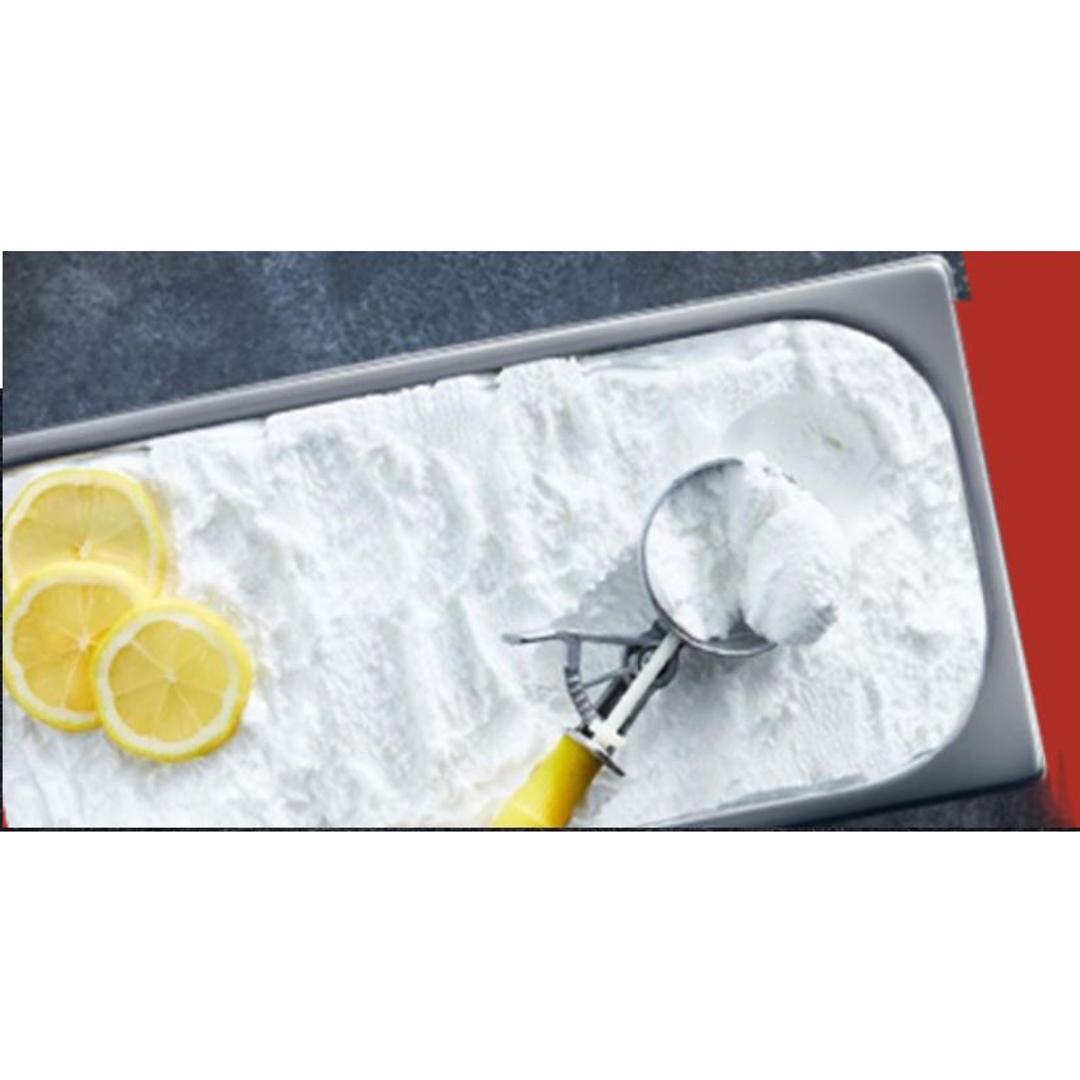
- Lemon Sorbet 5L for refreshing dessert portions, palate-cleansing courses and lighter menu rotations.
- Raspberry Sorbet 10L for vibrant desserts, blended drinks and event presentation.
- Mango Sorbet 10L for tropical flavour profiles, smoothies and summer service.
- Neutral Sorbet 10L as a versatile base for beverage blending, flavour customisation and high-volume applications.
Bulk formats can support better purchasing control when demand is predictable, while a consistent product specification helps chefs and managers maintain portioning and presentation from one service to the next. Instead of depending on multiple small-format products with different handling requirements, one coordinated range can cover several occasions across the kitchen.
Build a reliable cold-chain and storage routine
Frozen dessert performance begins well before the point of service. Institutional kitchens should establish simple storage procedures that protect quality, support food safety and make stock easy to manage.
Everest Vegan Vanilla Ice Cream should be stored at -18°C or below and should not be refrozen once thawed. The same disciplined approach should be applied to sorbets, with teams following the storage instructions and handling requirements shown on each product label.
Practical steps include:
- Allocate a consistent freezer location for the range so stock is easy to identify and rotate.
- Apply first-in, first-out stock rotation to minimise the risk of products remaining in storage beyond their intended use.
- Check freezer temperatures routinely and record any variation according to site food safety procedures.
- Use clean, dedicated utensils for scooping and portioning, particularly where allergen management is required.
- Plan thawing and tempering carefully so the product reaches a serviceable consistency without compromising safety or quality.
- Keep tubs covered and clearly labelled between services to protect the product and support accurate identification.
For aged care and healthcare settings, texture and portion suitability should also be assessed with the relevant dietitian, speech pathologist or clinical team. Frozen desserts may be appropriate for particular residents or patients, but they should only be served in accordance with individual dietary, swallowing and clinical requirements.
Use vanilla and sorbet as malleable menu staples
The strongest food-service products are not limited to one menu line. They are malleable staples that can be transformed across multiple applications without demanding significant additional labour.
Everest Vegan Vanilla Ice Cream can become:
- A classic scoop served with fruit, cake or warm pudding.
- A premium accompaniment to pies, brownies and baked desserts.
- A base for thickshakes and blended dessert beverages.
- A component in plated restaurant desserts.
- A familiar option for birthday celebrations, functions and special events.
- A soft-serve or machine-dispensed dessert where suitable equipment is available.
The sorbets provide a different but equally valuable kind of versatility. Lemon can bring brightness after a substantial meal, while Raspberry and Mango can add colour and fruit-led appeal to dessert cups, parfaits and buffet presentations. Neutral Sorbet can be used as a flexible blending base, allowing beverage teams and caterers to develop smoothies, frozen drinks and event refreshments around their own flavour profiles.
This versatility improves the return on every tub by allowing one product to support multiple service occasions rather than being tied to a single menu item.
Create menu rotation without creating procurement complexity
Menu fatigue affects institutional dining just as it affects restaurants. Residents may be served dessert daily, students respond to variety across a term, and healthcare or corporate kitchens need options that feel considered rather than repetitive.
A focused plant-based frozen dessert range can help create rotation through simple changes in presentation:
- Pair vanilla with seasonal fruit and toasted dessert components.
- Serve Lemon Sorbet as a clean, refreshing finish.
- Layer Raspberry or Mango Sorbet with fruit, granola or suitable plant-based accompaniments.
- Use sorbets in smoothie and beverage programs.
- Introduce themed dessert stations for celebrations, open days and corporate events.
- Build seasonal specials without changing the underlying frozen-dessert supplier.
The commercial benefit is meaningful. A more inclusive and varied dessert offer can improve perceived menu quality, encourage participation and support loyalty among diners who may otherwise feel overlooked. In education and corporate settings, it can strengthen the overall appeal of the food program. In aged care, it can contribute to a more welcoming dining experience where personal preferences are recognised as part of quality care.
Consolidate supply through a food-service partner
Product selection is only one part of a successful institutional program. Reliable supply, cold-chain capability and straightforward ordering are equally important when a venue cannot afford stock gaps.
The Plant Pantry supplies professional kitchens across Australia with ambient, chilled and frozen plant-based products, including venues such as schools, universities, aged care facilities, hospitals, healthcare organisations, corporate kitchens, restaurants and caterers. Through wholesale access, eligible food-service businesses can access trade pricing, menu-friendly pack sizes and consolidated ordering across a broad plant-based catalogue.
Explore the Everest collection, or review individual formats such as Everest Vegan Vanilla Ice Cream 5L. The related sorbet formats include Lemon Sorbet, Raspberry Sorbet 10L, Mango Sorbet 10L and Neutral Sorbet 10L.
Turn dietary inclusion into a measurable business advantage
Inclusive dining is an ethical responsibility, but it is also a sound commercial decision. Venues that anticipate dietary needs are better positioned to welcome larger groups, support repeat visits and strengthen their reputation with families, carers, students, staff and event organisers.
The business case for Everest plant-based frozen desserts rests on several practical advantages:
- Broader market appeal: Vegan, dairy-free and mainstream diners can select from the same premium range.
- Operational efficiency: Bulk formats and multiple applications help simplify preparation and service.
- Consistent quality: Reliable flavour and texture support repeatable results across shifts and sites.
- Reduced supplier complexity: A consolidated wholesale relationship can streamline ordering and delivery.
- Menu flexibility: Ice cream and sorbets can move between dessert, beverage and event applications.
- Future readiness: A menu designed for diverse dietary needs is better prepared for the evolving culinary landscape.
The imperative is clear: institutions and food-service businesses should not wait until a dietary request exposes a gap in their dessert program. By selecting versatile plant-based products now, they can redefine what inclusive dining looks like at scale : practical for the kitchen, appealing to the mainstream and meaningful for every guest.
Visit The Plant Pantry to explore the Everest range and enquire about wholesale access. In future articles, we will continue examining the operational decisions that help professional kitchens expand plant-based choices while protecting quality, efficiency and guest satisfaction.