
Cutting Costs in the Coolroom: Freight and Storage Efficiency with Shelf-Stable Plant Protein
For commercial kitchens, protein costs extend well beyond the invoice. Freight, coolroom space, energy use, stock rotation, waste and emergency deliveries all influence the true cost of putting a meal on the plate.
That is why shelf stable plant protein is becoming a strategic option for restaurants, cafés, QSRs, schools and aged care kitchens across Australia. Harvest B’s dry, rehydratable formats give food service operators a practical way to store protein at ambient temperature, add water when required and produce a larger ready-to-cook yield without relying entirely on chilled or frozen stock.
For businesses searching for wholesale plant based meat Australia, the opportunity is clear: improve storage flexibility, simplify ordering and make every delivery work harder.
The hidden cost of chilled and frozen protein
Chilled and frozen proteins remain vital to many commercial menus. However, they also place constant pressure on kitchen infrastructure and operating budgets.
Every refrigerated or frozen delivery can contribute to:
- Higher freight costs linked to cold-chain handling.
- Greater dependence on freezer and coolroom capacity.
- Increased electricity consumption.
- More frequent stock rotation.
- Product loss when demand changes unexpectedly.
- Limited flexibility during peak service periods.
- Additional receiving and inventory management requirements.
In a busy restaurant or institutional kitchen, storage space is a valuable operational asset. Every carton occupying a shelf or freezer position competes with other ingredients, finished goods and essential backup stock.
Shelf-stable formats change the equation. Unopened dry protein can be stored in a cool, dry area rather than taking up valuable refrigerated space, subject to the product packaging, manufacturer instructions and your food safety plan.
This does not eliminate the need for cold storage. Once rehydrated, the product should be handled as prepared food, refrigerated promptly, labelled and dated, and used according to product guidance.
What makes Harvest B different?

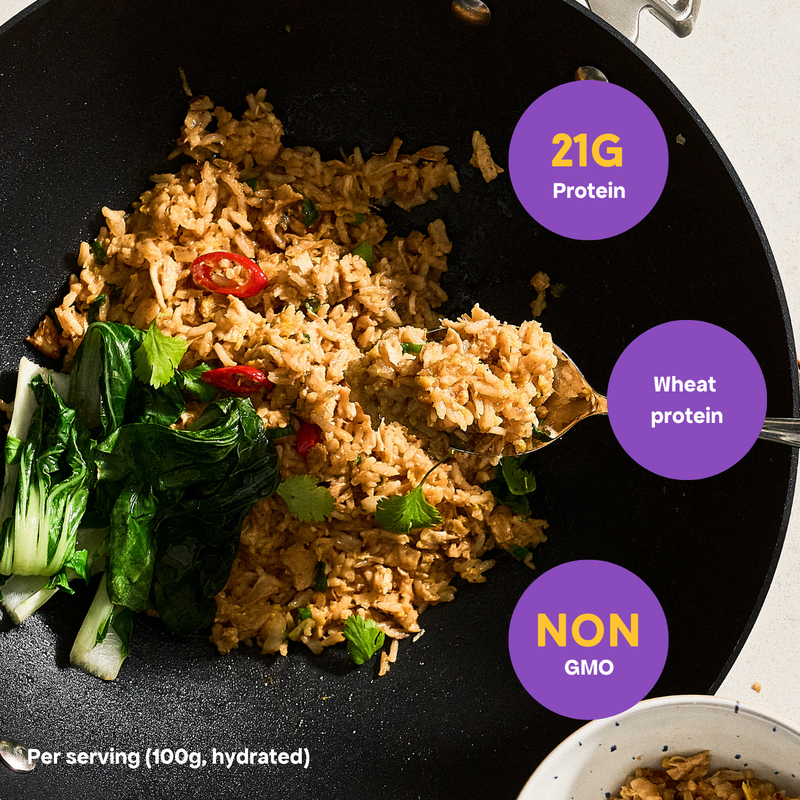
Harvest B produces dry, rehydratable plant-based proteins designed for commercial food preparation. The range includes chicken-style strips, chicken-style mince, beef-style mince, beef-style shred and red meat-style diced formats.
These products are made to be prepared when needed. The dry format is compact, lightweight and ambient, while rehydration takes place in the kitchen or production facility according to the required volume.
The Harvest B range at Plant Pantry includes formats suited to a wide range of menu applications, including:
- Tacos, wraps and burritos.
- Pasta sauces and lasagne.
- Pies, sausage rolls and filled pastries.
- Curries, stir-fries and noodle dishes.
- Grain bowls and salads.
- QSR burgers and loaded fries.
- Ready meals and meal preparation.
- High-volume catering and institutional menus.
Harvest B is particularly relevant for kitchens looking for wholesale vegan protein that supports consistency without requiring every item to be held in the coolroom.

More usable protein from less stored weight
The strongest commercial advantage of rehydratable plant based meat is the relationship between dry input and prepared yield.
For example, the Harvest B Chicken Style Strips bulk format is listed as a 7 kg dry bag producing approximately 20 kg of ready-to-cook protein. That represents nearly three times the original dry weight after rehydration.
Other listed Harvest B formats include:
- 6 kg dry beef-style shred producing an 18 kg yield.
- 7 kg dry chicken-style mince producing a 21 kg yield.
- 7 kg dry beef-style mince producing a 21 kg yield.
- 7 kg dry red meat-style diced protein producing a 21 kg yield.
This yield should always be assessed alongside your recipe, portion size, preparation method and final menu price. However, the operating principle is undeniable: freight and storage are based on the compact dry format, while production benefits from the expanded rehydrated volume.
That creates a useful cost-in-use calculation for food service buyers:
- Record the dry purchase cost.
- Divide it by the expected rehydrated yield.
- Add seasoning, sauce, labour and preparation costs.
- Compare the final cost per usable kilogram or portion with your current protein.
- Factor in reduced coolroom occupancy and potential waste.
This is more meaningful than comparing purchase prices alone.
Freight savings begin before the delivery arrives
A cold-chain delivery does more than transport food. It also requires temperature-controlled infrastructure, careful scheduling and rapid receiving.
Ambient dry protein offers greater flexibility across the supply chain. A commercial kitchen can plan deliveries around dry-store capacity and production schedules rather than treating every protein delivery as a time-sensitive coolroom event.
Potential freight and logistics benefits include:
- Less dependence on refrigerated transport for the unopened dry product.
- More compact storage before preparation.
- Easier consolidation with other ambient ingredients.
- Greater resilience when delivery schedules change.
- Reduced need for urgent top-up orders.
- Improved stockholding for remote, regional or institutional kitchens.
The exact saving will depend on your location, order volume, delivery route, freight agreement and existing storage setup. A restaurant with limited coolroom space may benefit most from freed capacity. A school or aged care kitchen may value predictable stockholding and simpler production planning. A multi-site operator may benefit from standardising an ambient protein across several kitchens.
The key is to assess total supply chain cost rather than freight cost in isolation.
Turn dry storage into a production advantage
Shelf-stable protein is not simply a substitute for chilled or frozen stock. It can also support a more responsive production model.
With rehydratable formats, teams can prepare a controlled quantity for each service period. This helps align production with actual demand, especially when covers fluctuate or menus change seasonally.
A practical workflow may include:
- Forecasting expected portions for the next service.
- Weighing the required dry quantity.
- Rehydrating according to the product specification.
- Seasoning or marinating to suit the menu.
- Chilling and storing the prepared product safely.
- Cooking in batches according to demand.
- Recording yield and wastage for future forecasting.
This approach is especially useful for caterers, food vans, schools and aged care kitchens, where demand can vary but reliable meal production remains essential.
It also gives chefs greater control over flavour and application. The same base protein can be seasoned for smoky barbecue, Mediterranean, Mexican, Asian-inspired or traditional Australian recipes. That versatility supports menu development without requiring a different frozen SKU for every dish.

A strategic option for textured vegetable protein wholesale
Many purchasing teams use the term textured vegetable protein wholesale when searching for dry, scalable plant-based ingredients. Harvest B sits within that broader category while offering application-specific formats for professional kitchens.
The distinction matters operationally. A food service buyer needs more than a low-cost dry ingredient. They need:
- Predictable rehydration.
- Consistent texture.
- Menu versatility.
- Reliable supply.
- Clear yield expectations.
- Pack sizes suited to commercial production.
- Support from a supplier that understands food service.
The Plant Pantry combines wholesale distribution with practical commercial kitchen experience. Its wholesale plant-based distribution service supports cafés, restaurants, QSRs, schools, universities, aged care, hospitals, government kitchens, food vans and manufacturers across Australia.
For procurement teams, this creates an additional efficiency: sourcing Harvest B alongside other plant-based ingredients through one specialist supplier can reduce supplier administration and simplify purchasing.
Where Harvest B fits across commercial kitchens
Different sectors can use the same shelf-stable advantage in different ways.
Restaurants and cafés can use strips, mince and shreds across rotating specials, lunch bowls, wraps and premium comfort food.
QSRs and food vans can benefit from compact stockholding and fast preparation for high-volume menu items such as loaded fries, burgers, tacos and toasted wraps.
Schools and universities can maintain a dependable plant-based protein option without dedicating excessive freezer space to slower-moving stock.
Aged care and healthcare kitchens can use mince and diced formats in familiar dishes while supporting portion control and planned production.
Caterers and central kitchens can rehydrate according to confirmed bookings, limiting the risk of overproduction and unnecessary waste.
The best results come from matching each format to a repeatable recipe and measuring the results over several production cycles.
How to measure the real business impact

Before changing your protein purchasing strategy, establish a simple baseline.
Track:
- Current cost per usable kilogram.
- Current cost per portion.
- Chilled and frozen storage allocation.
- Average weekly protein waste.
- Electricity and equipment pressures.
- Delivery frequency and freight charges.
- Labour required for receiving and stock rotation.
- Emergency orders caused by demand changes.
- Sales generated by plant-based menu items.
Then run a controlled Harvest B trial using one or two high-volume recipes. Measure dry input, rehydrated yield, cooked yield, portion count, waste and customer response.
This process turns a sustainability initiative into a clear commercial decision. It also supports broader ESG goals by connecting resource efficiency with measurable operational performance.
Build a more efficient protein supply chain
The shift towards shelf-stable plant protein is part of a significant journey in commercial food service. Operators are looking for food that performs on the plate while also performing across procurement, storage and production.
Harvest B’s dry, rehydratable formats can help kitchens:
- Reduce reliance on coolroom and freezer capacity.
- Increase usable yield from compact dry stock.
- Simplify inventory planning.
- Prepare closer to actual demand.
- Expand plant-based menu options.
- Strengthen supply chain flexibility.
- Support cost control and ESG priorities.
For businesses looking for a Harvest B supplier, explore the available products through Plant Pantry. Review the Harvest B collection, assess the formats against your menu and speak with the Plant Pantry team about wholesale supply for your kitchen.
Together, we can make plant-based protein more efficient to buy, store, prepare and serve without compromising the quality of the final dish.